
By: Ashley Marie Stewart, PhD
As early voting gets underway across the country, Americans are approaching the 2026 midterm elections with questions about the security and fairness of the electoral process. A recent AP-NORC survey found that fewer than half of registered voters were highly confident that votes in the upcoming election would be counted accurately. Concerns about misinformation, voter access, and election interference have added to the uncertainty surrounding November’s elections.
For Black Americans, these concerns reflect longstanding barriers to political participation, alongside newer challenges to voting access and election integrity. Understanding how they intersect with attitudes toward voting and civic engagement is especially important as the midterms approach.
Through its Amplifying Black Perspectives research initiative, the Congressional Black Caucus Foundation’s (CBCF) Center for Policy Analysis and Research (CPAR) collected survey responses from Black Americans between July and October 2026. Respondents expressed significant concern about election-related threats while also reporting strong intentions to vote and engage in civic life.
Concerns About Election Integrity and Voter Access
Respondents expressed widespread concern about potential threats to the electoral process, particularly misinformation and barriers to voting.
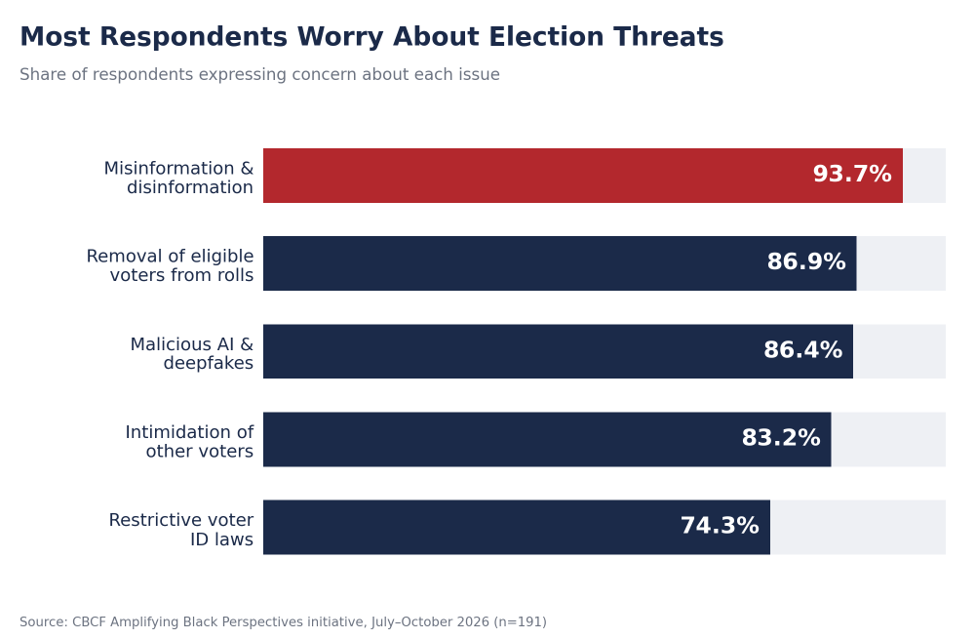
These findings suggest that respondents have a broad understanding of election integrity, extending beyond vote counting to encompass the reliability of information, access to registration and voting, and the conditions under which people participate. Concerns about misinformation and AI-generated content highlight the importance of trustworthy election information, while concerns about voter-roll removals and restrictive identification laws underscore the importance of accessible voting procedures.
Voting Intentions and Civic Engagement
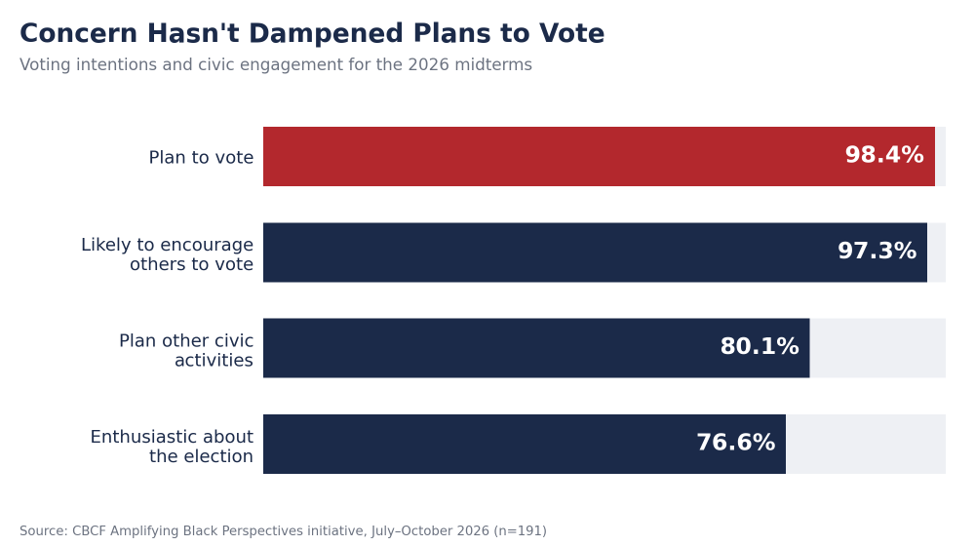
Despite these concerns, respondents reported strong intentions to participate in the 2026 midterms. Nearly all plan to vote (98.4%) and were very or somewhat likely to encourage others to vote (97.3%). Meanwhile, 76.6% reported feeling very or somewhat enthusiastic about the election. Engagement also extended beyond voting: 80.1% intend to participate in other civic activities during the election cycle, highlighting a broader commitment to civic engagement.
What Influences Voting Decisions?
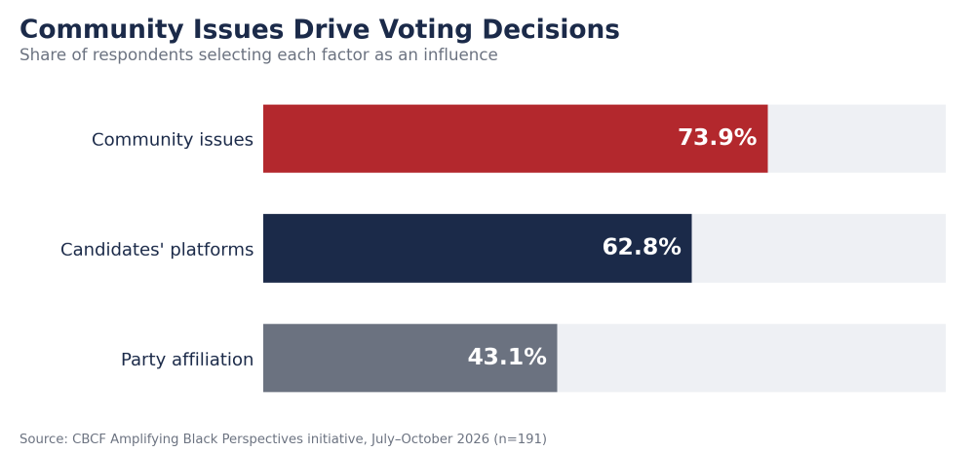
Community issues were the most frequently selected factor influencing voting decisions (73.9%), followed by candidates’ platforms (62.8%) and party affiliation (43.1%). Community issues exceeded candidates’ platforms by 11.1 percentage points and party affiliation by 30.8 percentage points. This pattern suggests that respondents place considerable importance on issues affecting their communities, more so than on candidates’ policy positions or party affiliations. For candidates and civic organizations seeking to engage voters, these findings underscore the value of connecting election information to community priorities and policy issues.
Understanding the Findings Together
Taken together, the findings reveal that concern about election integrity does not necessarily translate into voter disengagement. Respondents expressed substantial concern about misinformation, voting access, and intimidation while reporting high levels of intended voting and civic engagement.
The prominence of community issues and candidates’ platforms further suggests that meaningful civic engagement depends on more than election procedures alone. Providing reliable voting information alongside clear, accessible information about candidates and issues affecting local communities may help voters make informed decisions.
Know Before You Vote
As the 2026 midterms approach, these findings underscore the importance of verifying election information, understanding voting procedures, and engaging in civic activities centered on community priorities. Voters can access the following resources to help navigate the electoral process:
- Explore CBCF’s Black Civic Engagement Hub for voting rights and civic participation resources. This includes its 2026 Voting Rights Scorecard, which examines state-level voting access, voter suppression laws, legal challenges, and redistricting across 15 states, and its Status of the CBC Tracker, which monitors state-level redistricting efforts and their potential impact on the 58 members of the Congressional Black Caucus in the U.S. House of Representatives.
- Know your rights. Visit the ACLU’s Election Hub for information about voting rights and election protections.
- Check your registration. Use Can I Vote to find your state’s official voter registration information.
- Review voting options and deadlines. Visit Vote.gov for state-specific registration information and voting procedures.
- Find out what’s on your ballot. Consult your state or local election office for official ballot information, polling locations, and voting requirements.
- Verify election information. Consult official state and local election authorities for ballot information, polling locations, voting requirements, and deadlines.
Note: Findings reflect self-reported responses from 191 participants in CBCF’s Amplifying Black Perspectives initiative. A forthcoming report will examine these findings in greater depth, exploring the issues shaping respondents’ attitudes toward the 2026 elections, voting rights, and civic participation.