
The Pulse
At the CBCF’s 53rd Annual Legislative Conference (ALC), the Center for Policy Analysis and Research (CPAR) conducted an original data collection project that culminated in two reports. Amplifying Black Perspectives: Insights from the Pre-Election and Post-Election Reports outline Black Americans’ behaviors and concerns before and after the 2024 election. Ahead of the 54th Annual Legislative Conference this September, CPAR launched The Pulse, a series of biweekly surveys designed to capture the perspectives of Black Americans at this critical political moment. To receive the surveys, click here. We will feature an archive of the survey results on this page.
#6: Federal Takeover of US Cities
For this analysis, we compiled results from 197 subscribers to the Congressional Black Caucus Foundation email list. We conducted surveys from September 5-12, 2025. The survey was sent via email and completed online.
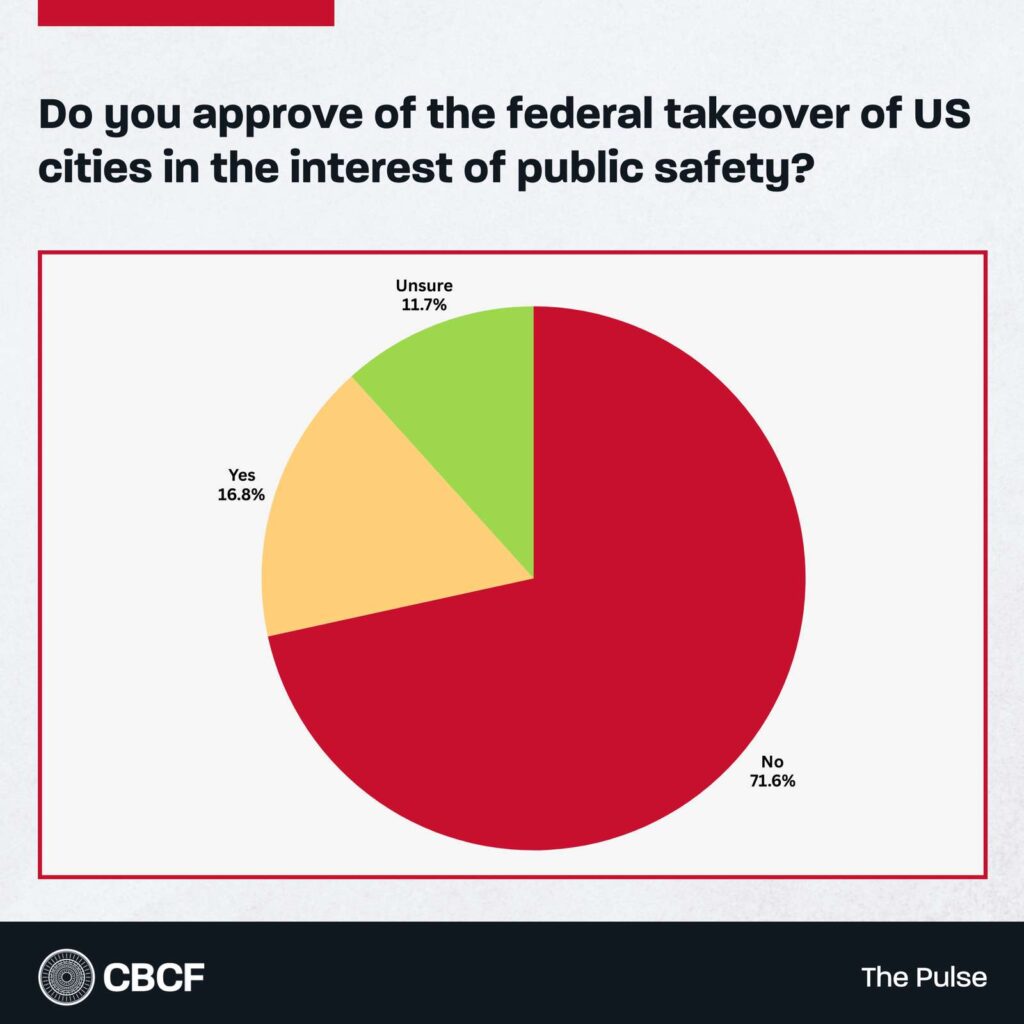
More than 70% of survey respondents do not approve of federal takeovers of US cities in the interest of public safety.
#5: One Big Beautiful Bill Act
For this analysis, we compiled results from 113 subscribers to the Congressional Black Caucus Foundation email list. We conducted surveys from July 15-22, 2025. The survey was sent via email and completed online.
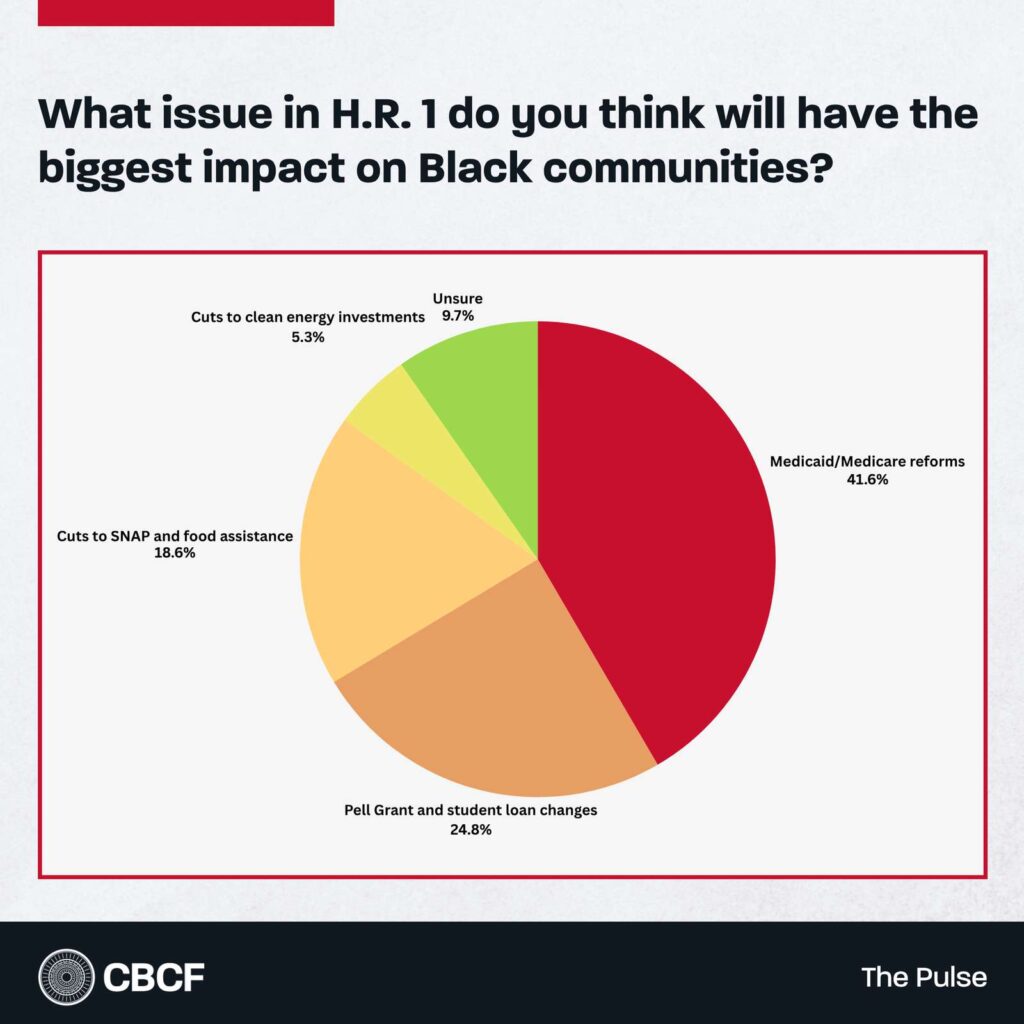
Over 40% of survey respondents indicated that the Medicaid and Medicare reforms in H.R. 1 would have the biggest impact on Black communities.
#4: Juneteenth
For this analysis, we compiled results from 287 Black subscribers to the Congressional Black Caucus Foundation email list. We conducted surveys from June 19-26, 2025. The survey was sent via email and completed online. We also asked CBCF followers on Instagram and LinkedIn to answer the question, and we quoted them below.
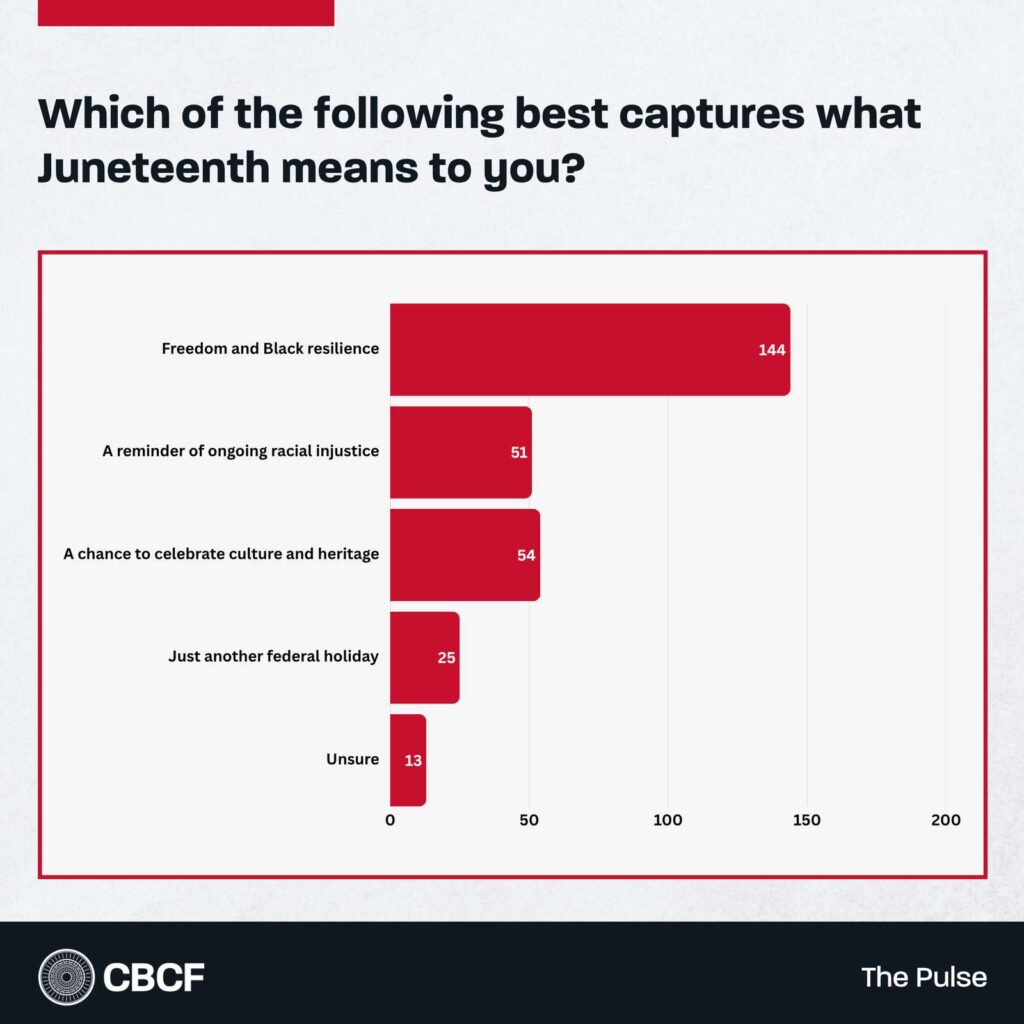
The majority of respondents said Juneteenth represented freedom and resilience to them.
“For me, Juneteenth means solidarity for the African American community. This can be buying from local African American businesses or reading about Juneteenth and learning something new.”
— LinkedIn user
“I certainly do not take for granted the freedom that I have. Especially at a time like this when forces are acting to steal those freedoms. I am grateful for the CBC and others that fight to ensure our freedoms remain and grow. Our community’s freedom affects everyone’s freedom!”
— LinkedIn user
“Juneteenth to me is more than just a celebration of Black history; it is a testament to sacrifice, a moment for reflection, and a declaration of freedom. It reminds us of the pain endured, the progress made, and the promise we must continue to fight for!”
— Instagram user
#3: Education Policy Updates
For this analysis, we compiled results from 69 Black adults who either subscribed to the Congressional Black Caucus Foundation email list or are participants in our CPAR research program. We conducted surveys from May 29-June 26, 2025. The surveys were sent via email and completed online.
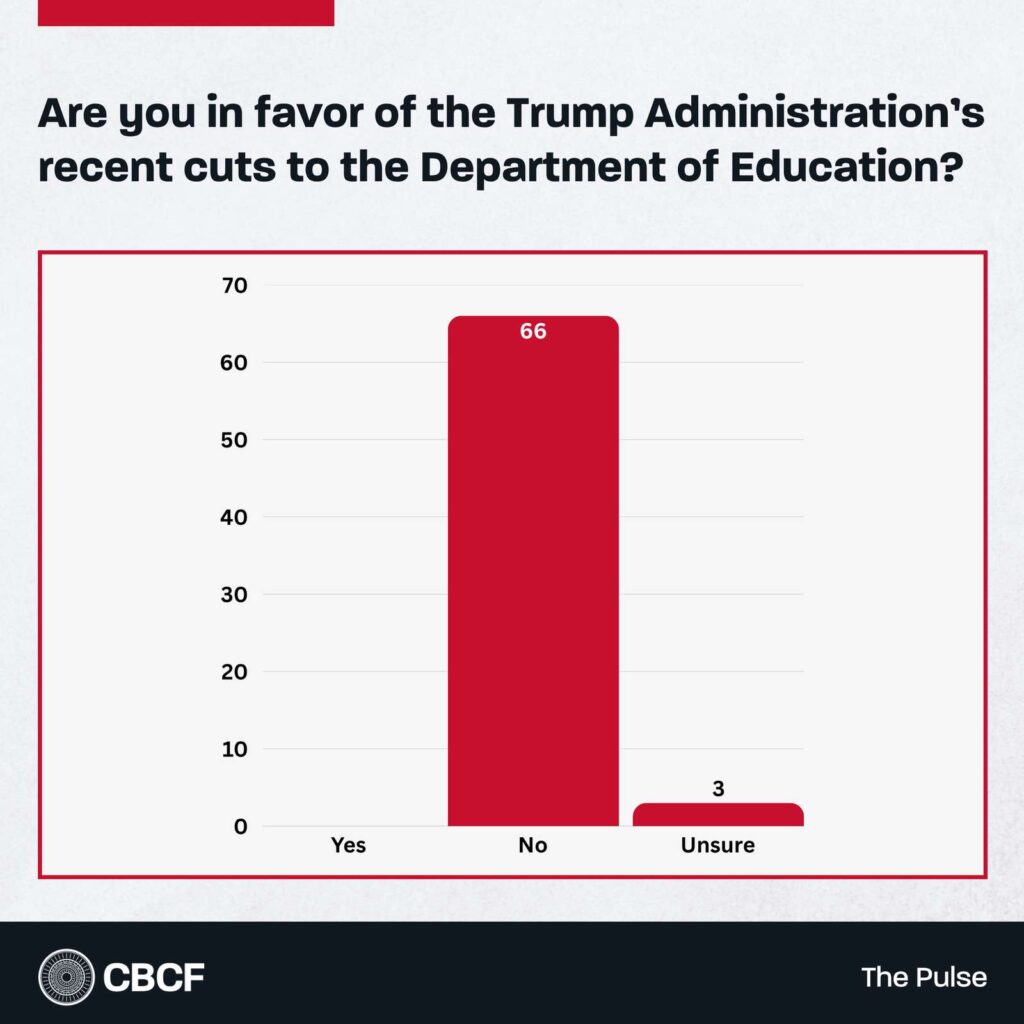
Since taking office in January, the Trump administration has issued several Presidential Actions, including an Executive Order that seeks to begin defunding the Department of Education in order to transfer authority back to States and local governments.
Zero respondents were in favor of the Trump Administration’s recent cuts to the Department of Education.
“It would be tragic if the Department of Education were eliminated. The Department of Education is critical to the implementation of desperately needed Title I funds, the administration of Pell grants, and federally funded student loans that millions of economically challenged students depend upon.”
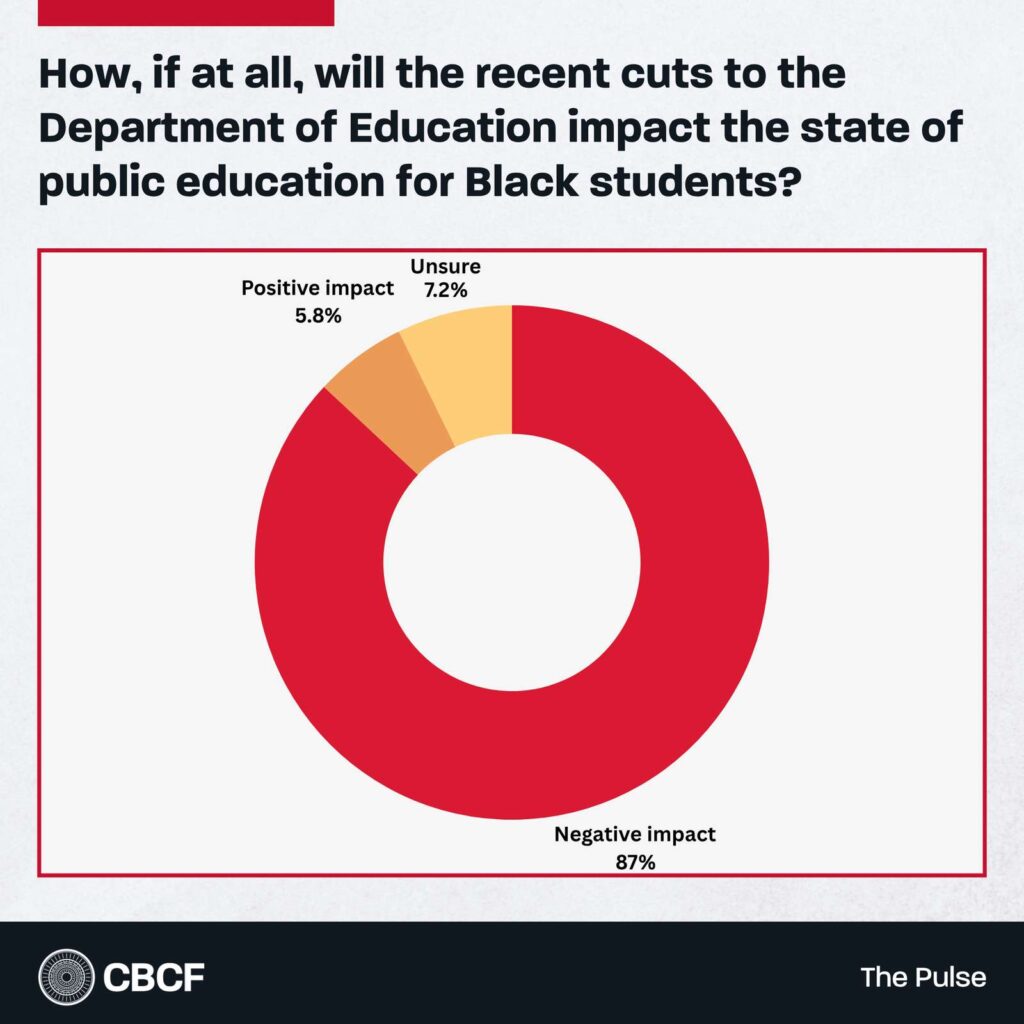
Over 85% of respondents indicated that the recent cuts to the Department of Education would negatively impact the state of public education for Black students.
“With so many Black children diagnosed with the need for individual learning plans there must be the necessary resources to ensure they do not become “throw-away” kids.”
“The implications are clear: weakening the DOE is not just a policy shift—it is an attack on educational equity and generational mobility for African American communities.”
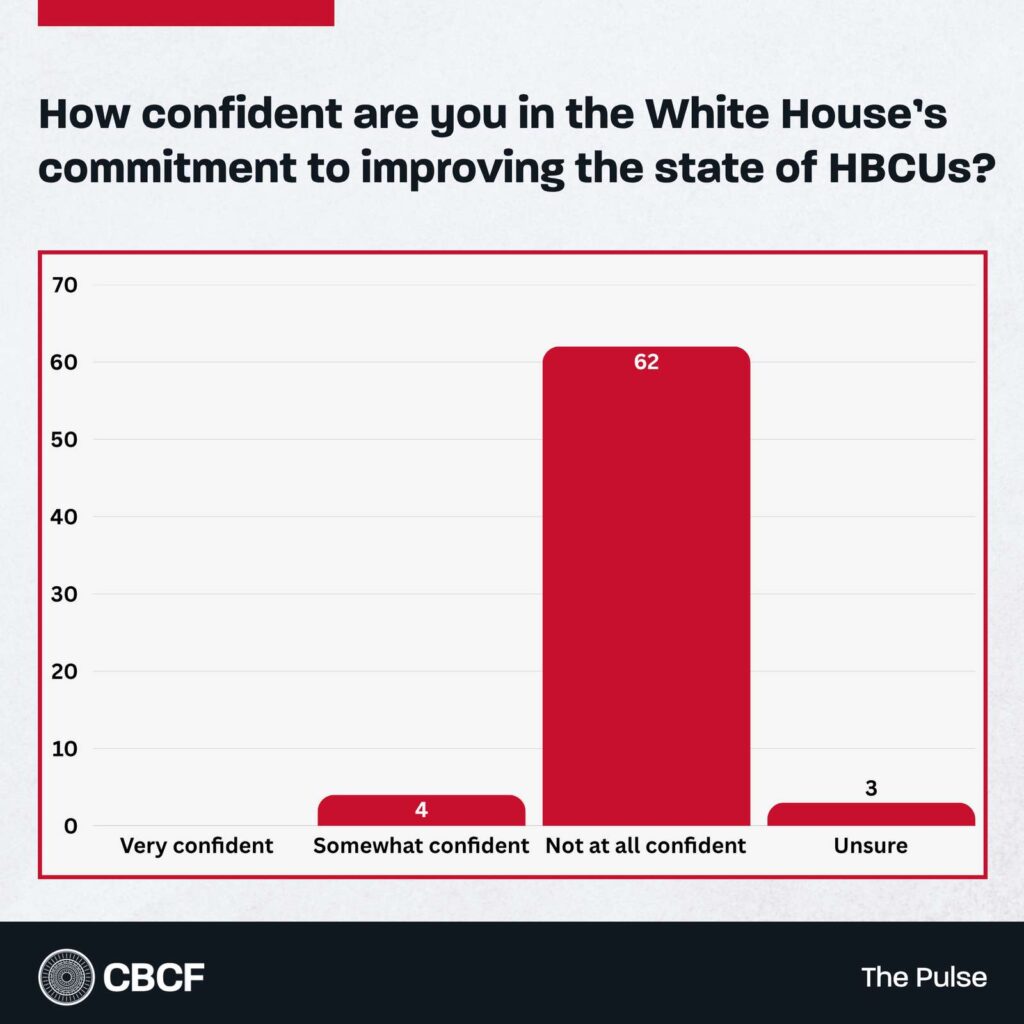
The Trump Administration issued an Executive Order that reestablishes a federal initiative aimed at supporting Historically Black Colleges and Universities (HBCU). This comes amid proposed $65 million cuts to Howard University’s federal funding and efforts to abolish programs or initiatives that emphasize diversity, equity, and inclusion (DEI).
Nearly 90% of respondents are not confident that the White House will honor their commitment to improve the state of HBCUs.
“The current administration’s efforts to dismantle or weaken the Department of Education (DOE) represent a direct threat to access, affordability, and opportunity for African American students—particularly those served by Historically Black Colleges and Universities (HBCUs). The DOE plays a central role in distributing federal student aid, enforcing civil rights protections, and supporting institutions that have historically been underfunded and overlooked. Undermining this infrastructure risks widening the racial and economic gaps in higher education attainment.”
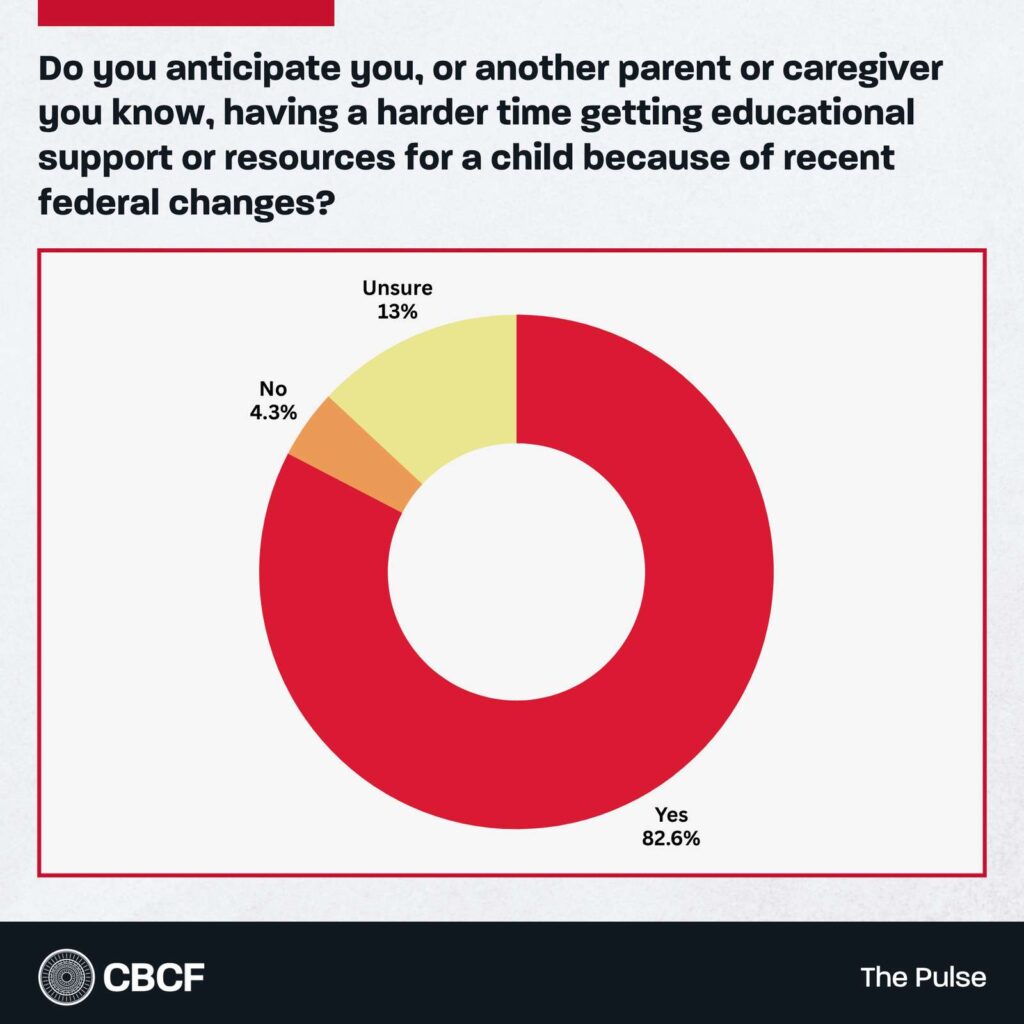
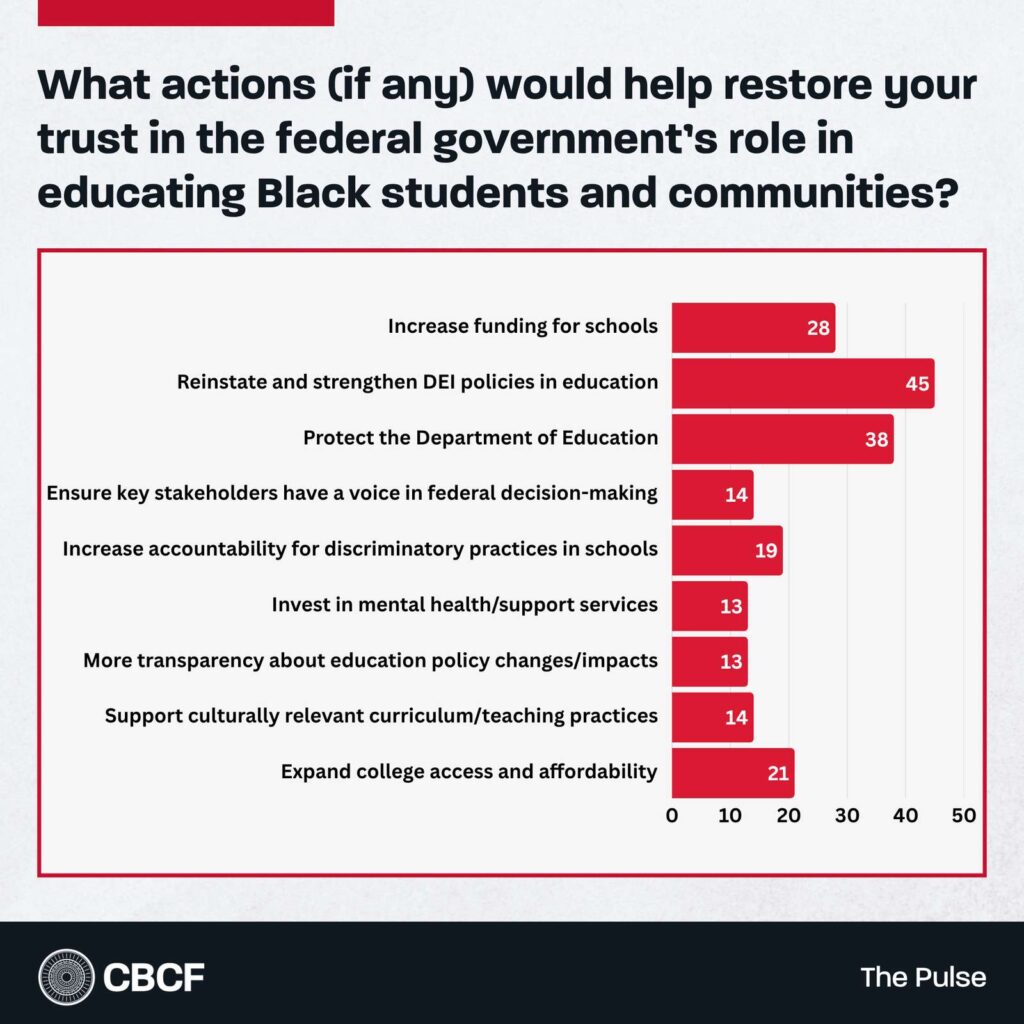
Most respondents indicated that reinstating and strengthening DEI (Diversity, Equity, and Inclusion) policies in education and protecting the Department of Education and its role in enforcing civil rights would help restore their trust in the federal government’s role in educating Black students and communities.
“I would have also put mental health and support. Truthfully, it is hard for me to imagine trusting the government’s role in supporting Black students in this administration. Until the dynamics at the federal level shift, I will not have trust.”
#2: Chronic Diseases and the Federal Health Workforce
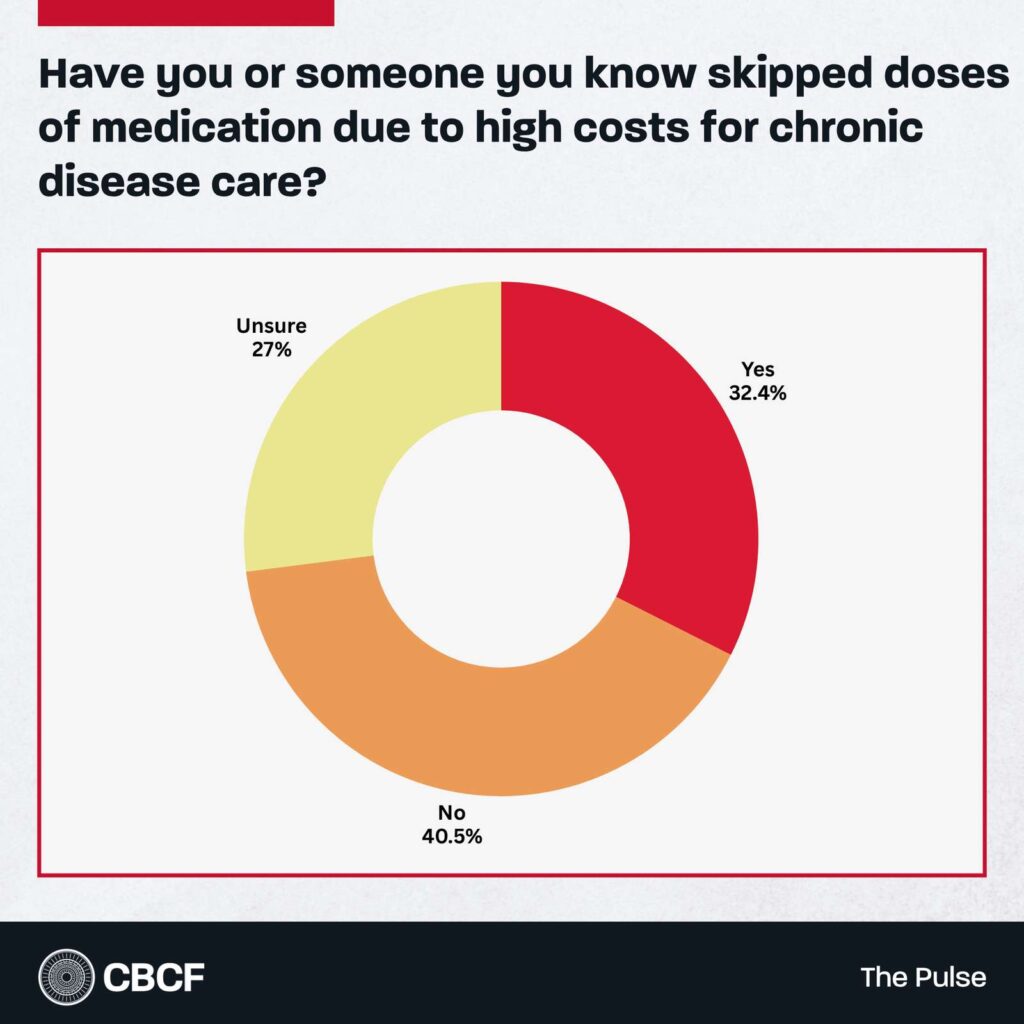
For this analysis, we compiled results from 37 Black adults who either subscribed to the Congressional Black Caucus Foundation email list or attended our Policy for the People Health Equity Summit on May 20. We conducted surveys from May 16-23, 2025. The surveys were sent via email and available via a QR code and completed independently online.

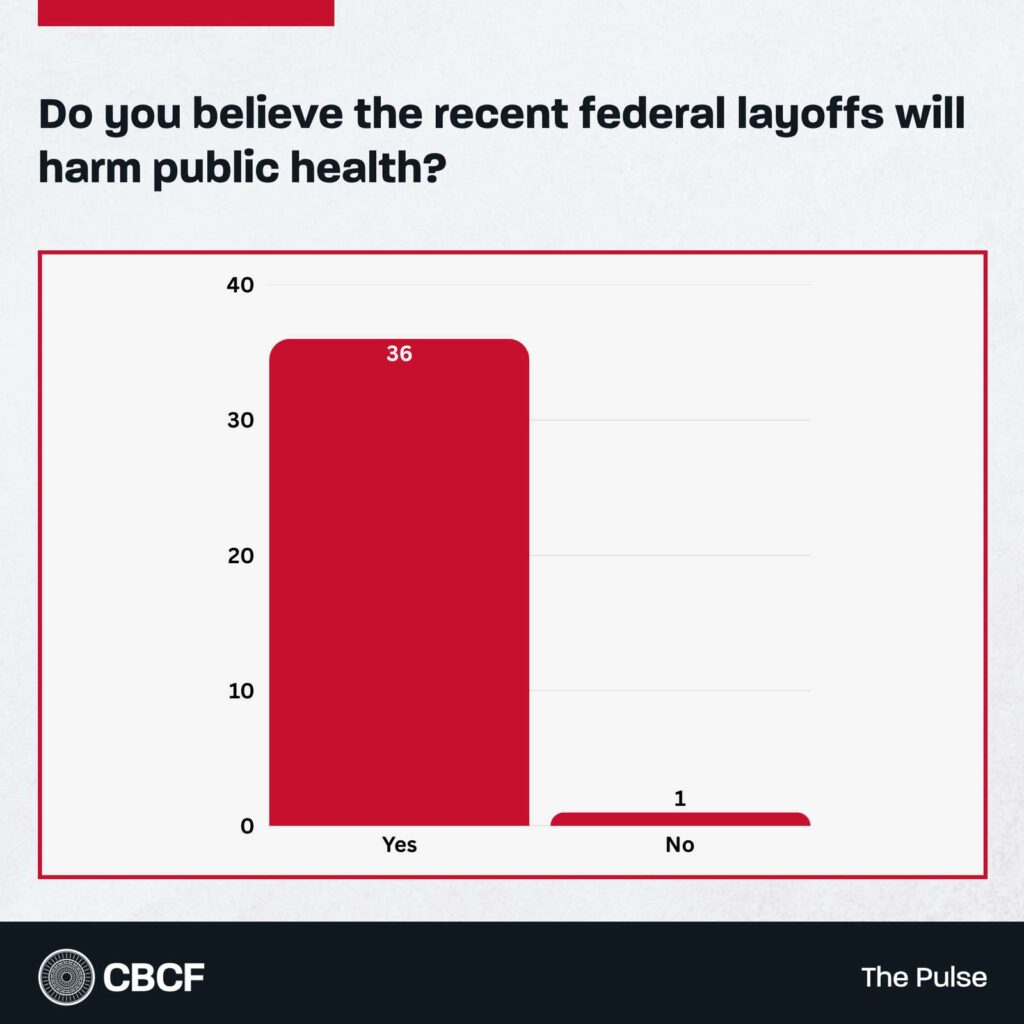
Since taking office in January, the Trump Administration has cut over 15,000 health-related federal jobs, including gutting departments that address racial disparities in health outcomes, like the Department of Health and Human Services’ Office of Minority Health.
Nearly all respondents opposed the Trump Administration’s cuts to the federal healthcare workforce.
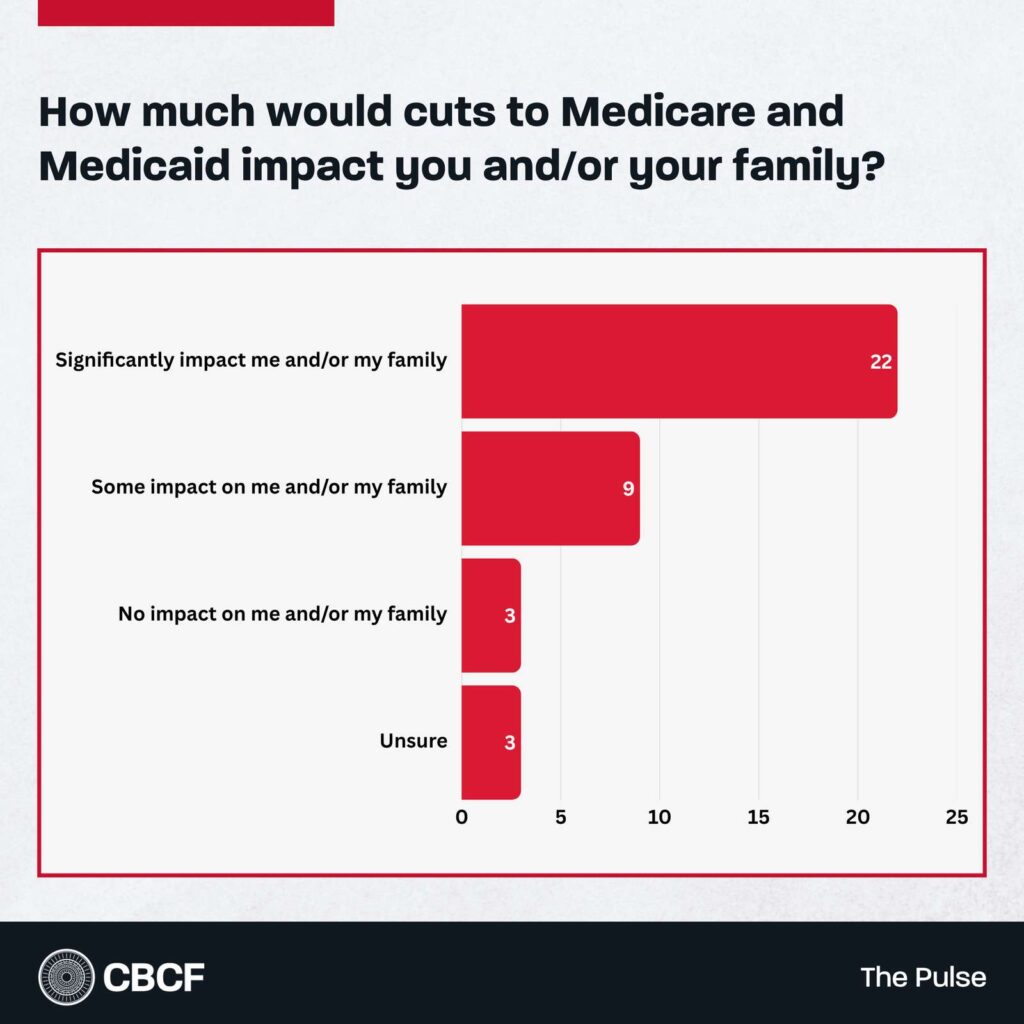
House Republicans recently proposed a $880 million cut to Medicaid in the new budget, which would be the largest cut in the program’s history.
Over half of the respondents said cuts to Medicare and Medicaid would have a significant impact on them or their families, and nearly all respondents said the cuts would have some impact.
“While Medicaid does not impact me directly, this is a critical resource for many Americans, and it shouldn’t be touched unless individual fraud is identified. Concerning Medicare, I will soon need to apply for this, and this is personally critical to me.”
“The healthcare system, under Medicare and Medicaid, provides safety nets for our most vulnerable populations. If there is fraud that needs to be addressed, that’s fine. But to dismantle longstanding healthcare for millions of Americans is not the right approach.”


Over 80% of respondents believe Medicaid and Medicare should cover GLP-1s.
“GLP-1 medications are available to those who can pay out-of-pocket. I do not think that everyone who is overweight or obese should have these drugs, but there are situations in which they are definitely warranted. Therefore, they should be covered by Medicare and Medicaid.”
“Rather than solely discuss prescription drugs as a way to treat chronic diseases, we need to significantly ramp ways to educate or reeducate about how lifestyle and diet impact health from a prevention perspective.”
#1: Fifth Anniversary of George Floyd’s Murder
For this analysis, we compiled results from 87 Black adults from our CPAR research program, which is primarily composed of Congressional Black Caucus Foundation event attendees. We conducted surveys from April 15-22, 2025. The surveys were sent via email and completed independently online.

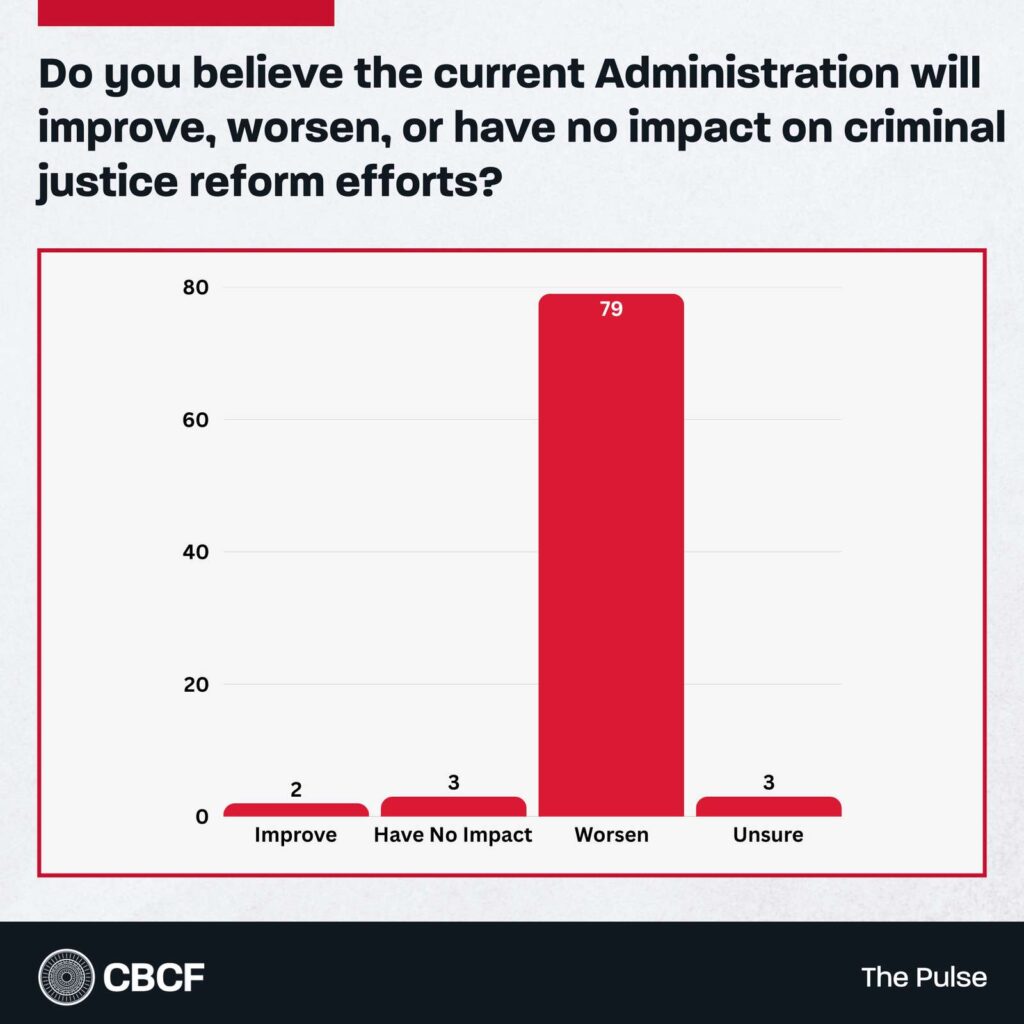
Over 80% of respondents believe the criminal justice system has stayed the same or worsened since 2020.
“While the post-George Floyd era has seen notable efforts to reform the criminal justice system and address racial inequities, the impact has been mixed. Some policies have led to improvements, but systemic disparities persist, and the momentum for change faces challenges, including political opposition and policy rollbacks. Continued advocacy and data-driven policymaking are essential to achieving lasting and equitable reform.”
— A Black female Baby Boomer
“While progress has been uneven, I believe there have been meaningful improvements in awareness, policy reforms, and community engagement since 2020. Initiatives focused on police accountability, restorative justice, and data transparency have gained momentum in several jurisdictions. However, systemic change takes time, and continued efforts are essential to ensure that reform leads to long-term, equitable outcomes. The movement sparked by George Floyd’s tragic death has pushed the conversation forward in powerful ways, and that momentum must be sustained.”
— A Black male Millennial